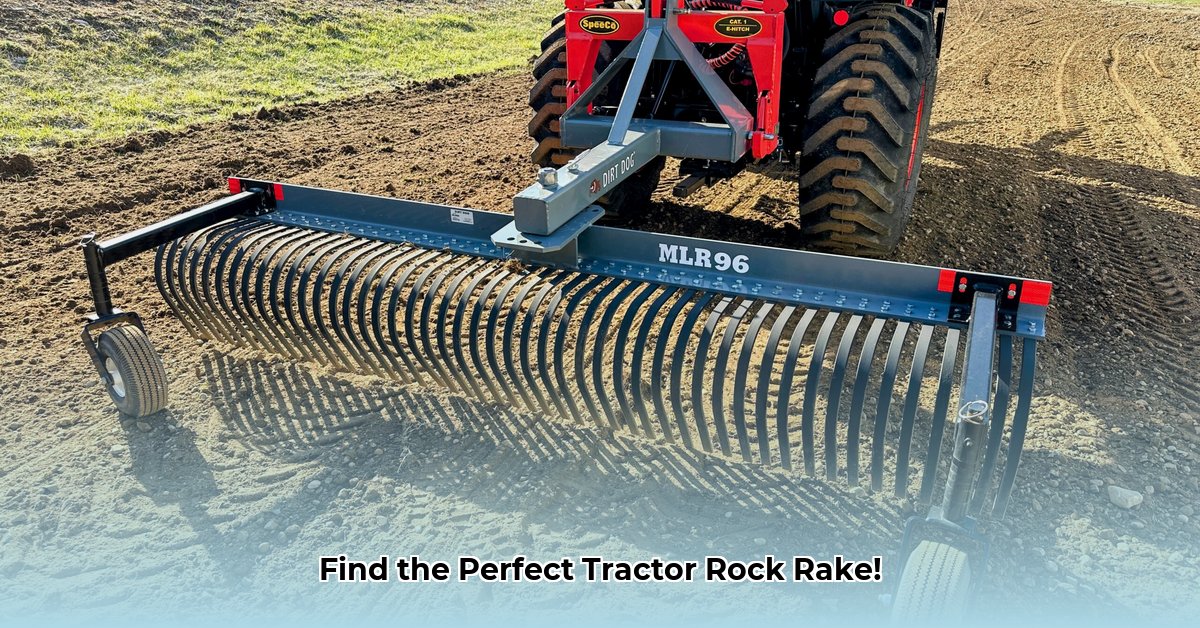
Selecting the Right Rock Rake for Your Tractor
Choosing the right rock rake significantly impacts land management efficiency. This section guides you through key considerations for selecting a rock rake that perfectly complements your tractor and project needs.
First, assess your tractor's power. A powerful tractor is essential for efficiently operating a heavy-duty rock rake. Next, determine the project's scale. A wider rake covers more ground quickly, but necessitates a more powerful tractor. Consider it similar to choosing a truck for hauling – larger loads necessitate larger, more powerful engines. For more detailed information on selecting the right rock rake, check out this helpful resource.
Examine the tines (the teeth that do the digging). Different tines are designed for different applications and soil types. Closely spaced, heavy-duty tines excel in rocky soil. Wider spaced tines are better suited for removing lighter debris, such as branches or smaller stones. Do you prioritize rock removal or lighter debris management? This question will heavily influence your tine selection.
Gauge wheels are critical; they maintain levelness, preventing uneven surfaces. Don't overlook their importance; they dramatically improve the quality of the finished work.
Finally, verify hitch compatibility. Ensure the rake's hitch system is compatible with your tractor's three-point hitch, preventing installation difficulties. This seemingly small detail can save hours of frustration.
The following table provides a comparison of features from different manufacturers (Note: Prices and specifications are subject to change. Always consult manufacturers for up-to-date information).
| Feature | Manufacturer A | Manufacturer B | Manufacturer C |
|---|---|---|---|
| Rake Width (ft) | 8 | 10 | 12 |
| Tine Spacing (in) | 6 | 8 | 10 |
| Gauge Wheels | Yes | Yes | Yes |
| Hitch Type | Cat I, II | Cat II, III | Cat II, III |
| Approximate Price (USD) | $XXXX | $YYYY | $ZZZZ |
Operating and Maintaining Your Rock Rake
Prioritize safety! Inspect the rock rake before operation. Check for loose bolts, bent tines, and secure hitching to the tractor. Think of it as a pre-flight checklist for your equipment. Accurate and thorough inspection is non-negotiable before each use.
Here's a step-by-step guide:
- Pre-Operation Inspection: Meticulously examine the rock rake for any loose or damaged components before each use. This proactive approach significantly reduces the risk of accidents.
- Proper Hitching: Adhere precisely to the manufacturer's instructions when attaching the rake to your tractor's three-point hitch.
- Safe Operation: Maintain a moderate operational speed to prevent equipment damage and ensure even grading. Avoid abrupt stops or starts.
- Regular Maintenance: Lubricate moving parts as recommended by the manufacturer. Regularly inspect the tines for bending or wear. Replace or repair damaged parts promptly.
- Troubleshooting: Bent brackets often indicate hitting a hard obstruction or overloading the rake. Reduce the load and check for obstructions before proceeding.
Regular maintenance significantly extends the rock rake's lifespan and minimizes costly repairs. It's a small investment that yields substantial returns.
Versatile Applications of Your Rock Rake
Rock rakes are surprisingly versatile. Here are a few applications:
- Land Clearing: Ideal for removing rocks and debris from fields or construction sites.
- Grading: Leveling land for planting or landscaping projects. Work in manageable sections for optimal results.
- Debris Removal: Cleaning up after storms, removing branches, and other unwanted materials. Remove large obstructions that might damage your equipment.
Remember to adapt the rake's angle and speed based on the specific task; experimentation is key to optimizing performance. What tasks are you planning to perform with your rock rake?
Navigating Lead Times and Quality Control
Lead times, especially for US-made rock rakes, can be longer than anticipated. Order well in advance to avoid delays; planning ahead is crucial for timely project completion. How far in advance should you order your equipment? Research suggests 6-8 weeks is an ideal timeframe. Contact manufacturers for more precise lead time estimates.
Quality variances exist; therefore, always meticulously inspect your rock rake upon delivery. Check for any damage and promptly inform the manufacturer or supplier of any issues. Familiarize yourself with your warranty rights to ensure protection against defects.
Conclusion
This comprehensive guide equips you with the knowledge to select, operate, and maintain your rock rake effectively. Remember, proactive planning, careful operation, and regular maintenance are crucial for optimal performance and longevity.